

For emergencies, call 911.Lucas + Sentinel · Detailr Corp

LUCAS + SENTINEL / PUBLIC SAFETY COMMUNICATION

When safety needs attention,
make the message clear.

A dedicated connection between departments and the communities they serve. Share timely safety information, understand what to do, and give useful information a way back.

Lucas is free for residents.

Public safety communicationEXAMPLE
INFORMATION REQUEST

A community can help.

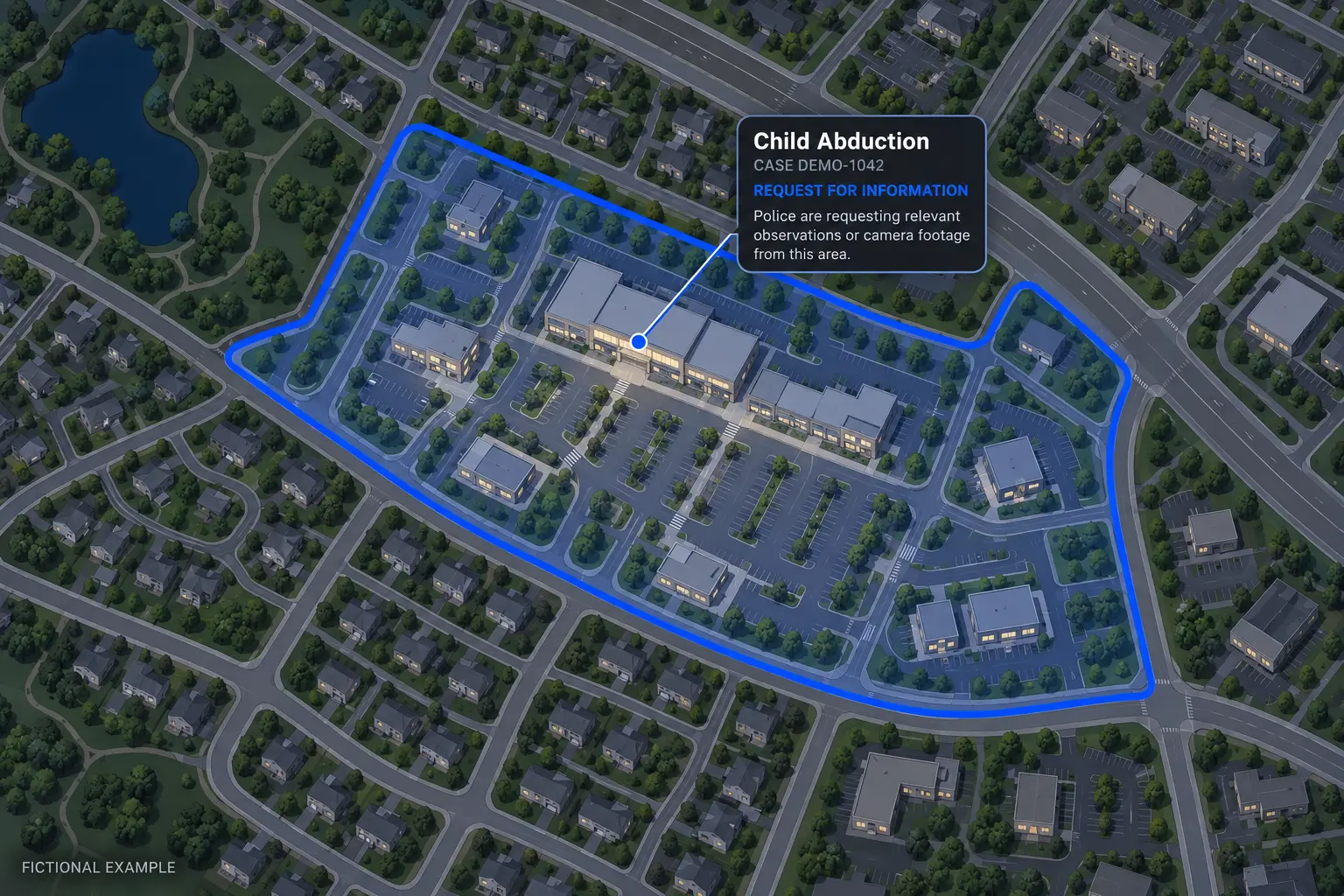
An example department asks residents near a shopping center to check existing camera footage.

01

Choose an areaDefine where the request is relevant.

02

Publish a clear requestExplain what information may help.

03

Review what comes backGive each submission a next step.

Explore the workflow

Fictional example. Illustration is not a live incident or coverage map.

WHY COMMUNICATION MATTERS

When information matters, the details matter.

Public safety depends on more than a message going out. People need to recognize its source, understand the situation and know what action is appropriate.

13 million+

criminal offenses reported to the FBI by participating agencies for 2025.

FBI: 2025 reported crime data National reporting context, not a measure of Lucas usage or outcomes. Not every incident calls for a public alert.

Two sides.
One connection.

Residents and departments need different tools. Lucas and Sentinel are designed to work together, while keeping each agency’s responsibilities clear.

LucasFor residents

Know when local safety needs your attention.

Home, work and family can connect you to more than one city. Receive time-sensitive information from vetted participating departments in one free app, with the issuer and requested action visible.

  • Read a clear safety message and requested action.
  • Follow vetted departments for the places in your life.
  • Send relevant observations and supported camera material.
The resident experience
SentinelFor departments

Publish, receive and assign.

Sentinel brings geographically targeted alerts, incoming Lucas tips and officer coordination into one department workflow.

  • Choose an alert area and a clear public action.
  • Assign officers, set status and maintain internal notes.
  • Manage department personnel and their roles.
The department experience

How the connection works

A timely message.
An organized response.

A brief alert can draw attention. The full update helps a person understand the situation and decide whether they have something relevant to add.

01

A department publishes.

A targeted safety message explains the affected area and what people should do.

02

A resident reads the detail.

An identifiable department, place and time help a resident understand the instruction.

03

Information can come back.

The department receives relevant information, assigns an officer and records the next step.

A resident’s information can be useful beyond the city they are in. Someone may read a request near work, then recognize something while visiting family elsewhere. The important connection is to the agency responsible for the request.

That is the network Lucas and Sentinel are intended to support: residents following relevant sources, with information returned to an identifiable agency. Its value depends on participation, accurate detail and a review process that can support the channel.

Follow the complete workflow

From publication to review

More than a message.
A working process.

One coordinated channel helps departments publish a clear request and organize the information it brings back. Lucas is free for residents; agencies define who operates their side. The platform focuses on vetted department sources, relevant geographic audiences and messages that warrant attention. Alerts often move in around a minute. Actual delivery timing varies; the description is approximate, not a guaranteed deadline. A clear message can give a safety instruction or request information, and incoming tips can move to an officer with a status and internal notes.

Department to residents to agency review: a targeted alert, a relevant response, and officer assignment with status and internal notes.
01 / PublishDefine the area and action.

Choose the audience for a time-sensitive message.

02 / ReceiveKeep the response connected.

Review case-related information and new tips.

03 / CoordinateAssign the next step.

Officer, status and internal notes stay with the work.

An illustrative neighborhood street pattern with a blue boundary marking the selected alert area.
Geographic targetingReach the area that needs the message.

A department selects an alert area. The message explains the affected place and the action residents should take.

An illustration, not a live map or a statement of service coverage.

A fictional example

A missing child.
A community that knows what could help.

A clear request gives residents a way to contribute information they already have.

Privacy in practical terms

Before you share,
know what you are sharing.

A setting, a device permission and the contents of a tip answer different privacy questions. Read each one for the protection it actually describes.

Three questions to consider separately
The choiceWhat to understandRead more
Profile visibilityLimited routine access to some account details does not make a tip anonymous.Profile visibility
Location permissionA device permission is separate from a place you describe in a tip.Location data
A delivered tipThe receiving agency may retain its own copy. Account deletion does not recall it.Agency records

A photo can reveal a place or a person even when some account fields have limited visibility. Review the text and attachments together. The complete consumer Privacy Policy explains what the service collects and the disclosures it permits.

The policy states that personal information is not sold or used for targeted advertising as of its effective date. That statement belongs with the full policy, including its service, agency, legal and safety provisions.

Understand privacy and responsibility

For department teams

Start with the task.
Review the whole process.

A useful evaluation follows a public update through to the information the department receives.

Use an approved scenario to inspect both products. Can a resident identify the source and recipient? Can staff complete the relevant publication and review tasks? What happens when the usual reviewer is unavailable?

Review technical behavior alongside operating responsibilities and governance. The NIJ-sponsored adoption guide treats those as related considerations. A polished screen alone cannot answer all of them.

The Sentinel product listing describes public and internal cases, incoming tips, status, assignment and department transfer. A demonstration should establish the current behavior your agency would rely on.

Plan a focused pilot
Built for useful community participation

A community has
more to contribute.

Our mission is to make critical public safety information easier to understand and act on, and relevant observations easier to return to the agency that needs them.

A wider network can create more opportunities for a useful observation. Growing it responsibly means keeping sources clear, participation voluntary and the public explanation aligned with the actual product.

Our mission and principles

Find your starting point

Begin with a place
you know.

The community directory offers a Census-based place inventory and official local resources where researched. A place entry does not mean that a department participates in Lucas.

Search a city or state. Participation must be confirmed with the agency.

    The inventory covers 1,623 place records, not 1,623 customers or operating communities. Confirm agency participation separately and keep official warning subscriptions available.

    From attention to understanding

    Critical information needs a clear action.

    An alert is easier to use when the important questions have clear answers.

    Fictional example

    Example Department · 2:15 p.m.
    Shelter indoors within the marked Oak Park area. Lock doors and follow the department’s next update. Fictional illustration only.

    Who issued it? Which place does it concern? When was it published? What is the department asking people to do? Those questions help a reader distinguish a current instruction from an old image or a message about somewhere else.

    Imagine a fictional department warning residents of a threat near Oak Park. A headline that simply says to be alert leaves important questions unanswered. Naming the affected area, publication time and instruction to shelter indoors gives the message an action people can understand. A later update can explain when the instruction changes.

    Not every public update is an emergency warning, and not every update asks for a tip. Read the action the issuing agency actually describes. A request for information should identify what could help and where it should go; a traffic notice may simply ask people to avoid an affected area.

    FEMA’s warning-message guidance emphasizes source, place, time and protective action alongside the threat and its expected impact. The agency determines the actual message and advice. Lucas is intended to keep a department’s update and its supporting detail together, so the reader can move beyond the first notification.

    Sources: FEMA: alert and warning message content

    Reading department updates

    Sharing what you know

    An observation does not need embellishment.

    A factual account gives a reviewer more to work with than a confident conclusion.

    Fictional example

    “I saw a child wearing a blue jacket near the east entrance of Oak Park around 2:30 p.m. I could not confirm whether it was the child in the department’s request.”
    Fictional observation only.

    Describe what you personally saw or heard. Include the place and approximate time, then explain why you think it relates to the request. If part of the account came from someone else, say so. A reader should be able to tell an observation from an interpretation.

    For example, saying that a person must be the subject of a missing-child request goes further than describing the features you actually observed. A factual account can identify the location, approximate time and details that seemed relevant while explaining what you could not confirm. That gives a reviewer useful information without turning a resemblance into a conclusion.

    An estimate can be helpful when it is clearly an estimate. If you remember an event as happening shortly after leaving work, explain that basis instead of supplying an exact minute you do not know. For a recording, point to the relevant period and mention any known camera-clock discrepancy.

    The FBI’s public tip guidance emphasizes accurate facts, where and when, including relevant video timestamps. These are general principles for an understandable account. The receiving agency’s instructions and the current reporting feature determine how the information should be submitted.

    Share information you already have. A public request is not an instruction to pursue someone, enter property or create an opportunity to gather more material. Useful participation begins with your own safety and a clear account of what you know.

    Sources: FBI: submitting information in a tip

    Preparing a clear tip

    A shared resident experience

    Your day does not end at a city line.

    Home, work and family can connect you to several departments without making those departments interchangeable.

    A person might live in one city, work in another and regularly help a relative elsewhere. Each place can have a different police service provider and different official warning subscriptions. Lucas is designed around following multiple participating departments while keeping the source of each update visible.

    That matters when information comes back as well. An observation made outside the city where a request began may still be relevant to the issuing agency. Check the current request, the recipient and the supported reporting route. Explain the connection rather than assuming that your present location answers every jurisdiction question.

    Following an agency is separate from enrolling in a city or county warning service. Keep the official subscriptions recommended for the places that matter to you, and review them when your routine changes. An app preference does not automatically update an address held by another provider.

    The intended network effect is an increase in opportunities for relevant information to reach a participating agency as more people and departments take part. That is a reason to build the exchange carefully. It is not a claim of current nationwide adoption or a guarantee that a particular observation will receive a response.

    For the department, the connected resident experience still needs a clear operating boundary. Someone must own publication, review and any permitted handoff. The public should be able to identify the source and recipient even when the people involved are in different places.

    Organizing sources for several places

    Different sources of information

    A record can show a moment. A person can explain an observation.

    A camera record and a voluntary account can contribute different details to the same question.

    A license plate observation concerns a vehicle at a place and time. A person may also know something about an item, a conversation or an event that was not captured in that observation. The two information types can complement one another. Neither provides every circumstance by itself.

    The comparison should be accurate. Flock’s current product information includes portable and mobile LPR offerings as well as other deployments, so describing all license plate readers as fixed would be misleading. The IACP advises treating an ALPR alert as a lead requiring confirmation rather than conclusive evidence. A resident’s account likewise needs assessment.

    For relevant camera material, keep the original where possible and describe its source, relevant period and relationship to the request. NIST’s digital-evidence preservation guidance explains why the origin and handling of material matter. It does not establish that any particular app upload proves authenticity or supplies a complete chain of custody.

    A voluntary tip also raises its own privacy questions. The person chooses what to contribute, but the account or attachment can still reveal personal information. Read the service’s policies and the receiving agency’s instructions. A difference in collection method is not a blanket claim of superior privacy or better outcomes.

    Lucas and Sentinel are intended to make relevant community information easier to connect with an agency workflow. Where a particular file cannot be sent through the current feature, ask the agency for its preferred route. The explanation accompanying the material can be as important as knowing that a file exists.

    Sources: NIST: digital evidence preservation · Flock Safety: LPR products · IACP: responsible ALPR use

    Tips, camera material and supporting detail

    Before you get started

    A few important answers.

    Does Lucas replace emergency warnings or 911?

    No. For an emergency, call 911. Official warnings, local subscriptions and agency reporting services have their own roles. App publication, notification delivery and agency response are not guaranteed. Keep the official channels recommended for your area.

    Can I follow more than one department?

    Lucas is designed around following multiple participating departments. Check the identity and participation of each source. The resident experience can connect several places while each agency retains its own responsibilities.

    Is a tip anonymous?

    Limited profile visibility is not anonymity. The contents of a tip can identify a person independently of some account fields, and the receiving agency can retain its delivered record. Read the full Privacy Policy before relying on a setting.

    Where can I get the resident app?

    See current app availability or contact the team for a confirmed resident download destination. Sentinel Dashboard is the department product; its store listing is not a substitute resident download.

    What should an agency ask before a pilot?

    Begin with the communication task, then examine the current product and operating arrangements. Identify who publishes, who reviews, what information is retained and which requirements still need evidence. Our evaluation guide provides a practical starting point.

    Does a tip create an official police report?

    A tip, a formal incident report and an emergency request can follow different processes. Do not assume that a submission confirmation is an approved report or final report number. Read the receiving agency’s current instructions for the incident and location. The reporting guide explains how to choose a route without treating every contact form as the same service. Choose a reporting channel.

    What if I cannot find my city in the directory?

    The inventory has a stated population threshold and does not comprehensively include smaller places, neighborhoods or unincorporated communities. A missing name does not mean a place lacks public services, and a listed name does not confirm Lucas participation. Continue through your city, county or state’s official resources to identify the authority and its current instructions. Understand the directory.

    Why can an app notification fail to appear?

    Publication, acceptance by a delivery service, receipt by a phone and a person noticing it are separate events. Connectivity and device settings can affect what happens, and an agency may not have published the expected update. Check the source first, then the app and device. Product support can help investigate an issue; it cannot provide emergency monitoring. Notification troubleshooting.

    Can I send information about a request from another city?

    Information can be relevant outside the place where it was observed. Check the originating request, the intended agency and the reporting feature currently available. Explain how your account relates to that request. Do not assume that every department participates or that every submission will be transferred automatically. The current product and agency process determine the supported route. Follow the information flow.

    What should stay with a camera clip?

    Keep the original material where possible and follow the receiving agency’s directions. Identify the camera or device, the period that matters and any known difference between displayed time and actual time. Avoid editing a file simply to make the account look more certain. If the current attachment option cannot accept the material, ask the agency how it wants a copy supplied. Camera-material guidance.

    Who develops Lucas and Sentinel?

    The products are developed through Detailr Corp. Jacob Brink (Jacob Dawson Brink) is founder and Chief Executive Officer, leading product direction and business operations. Trey Everett Hugan is technical co-founder and Chief Technology Officer, working on the applications and the decisions connecting the resident and department experiences. The company and leadership pages explain their current responsibilities. Company and leadership.

    Where can I ask a product or accessibility question?

    Use the published business contact: support@detailrcorp.com or 925-201-5156. Describe the page or feature, what you expected and what happened. For an accessibility barrier, the task and device details can help; a medical diagnosis is not needed. Keep passwords, sign-in codes and investigative material out of a general support inquiry. Incidents and urgent assistance belong with the responsible authority. Contact the team.

    Is Lucas free for residents?

    Yes. Lucas is free for residents and focuses on time-sensitive public safety information from vetted participating departments. Current app availability and agency participation should be checked separately. Resident availability.

    How quickly can an alert arrive?

    The platform is built for prompt communication, often around a minute. That is an approximation, not a fixed delivery promise. Department publication, connectivity, supported notification features and device settings affect the timing. Notification delivery and settings.